
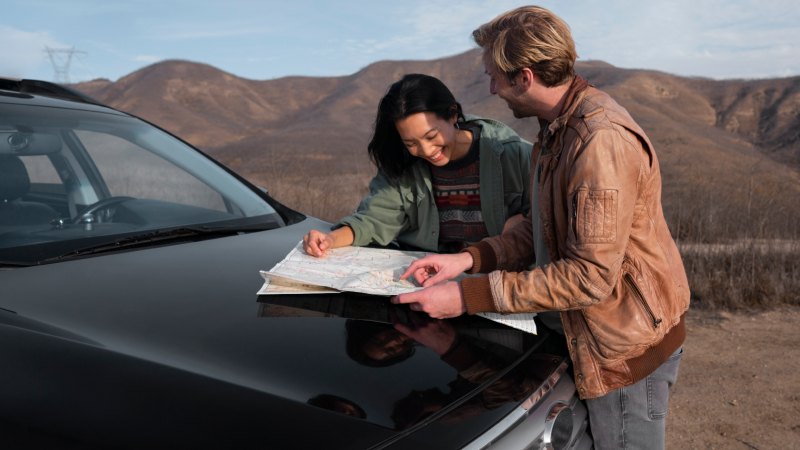
The desert is the part of the UAE that stays with people. Not the malls or the towers, but the moment the city thins out, the road narrows and the dunes rise on either side in shades of orange and rust. A road trip into that landscape is easy to arrange and hugely rewarding, but it rewards preparation too. Heat, distance and long stretches without services can turn a careless outing into a stressful one.
This checklist walks through everything to sort out before you go, from the car to the cool box. Work through it in order and you will spend your time watching the light change over the sand rather than worrying about what you forgot.
1. Choose the Right Car
For a desert road trip, comfort and robustness matter more than speed. A large, body-on-frame SUV gives you ground clearance, space for supplies and a cabin that handles long distances well. The Toyota Land Cruiser has been the default desert vehicle across the Gulf for decades, and a Land Cruiser rental Dubai is a natural starting point if you want something proven and reliable. Other large SUVs, such as the Nissan Patrol, are similarly at home on long desert highways.
What matters most is that the air conditioning is strong, the tyres are in good condition and the car has enough room for water, food and luggage without anything rattling loose in the boot. Before leaving the city, check the tyre pressures, the spare wheel and the jack, and make sure you know where the hazard lights and the bonnet release are.
2. Read the Rules on Off-Road Driving
A big, capable SUV does not automatically mean you are allowed to drive it on sand. Most rental agreements in the UAE restrict or ban off-road use, and the conditions can vary between companies and even between cars. Read your contract carefully. If off-road driving is not explicitly permitted, keep to paved roads and treat the dunes as scenery.
If you want the thrill of the sand itself, book a guided dune tour with a licensed operator. Their drivers know how to read the terrain, deflate tyres correctly and recover a stuck vehicle, and they use cars prepared for the job.
3. Pick a Route
The UAE offers several desert drives that stay on tarmac while still feeling remote:
- Al Qudra, Dubai: desert lakes, cycling tracks and wide sand views on the edge of the city, ideal for a half-day trip.
- Liwa and Moreeb Dune, Abu Dhabi: a long drive south-west into the Empty Quarter’s fringes, where some of the tallest dunes in the region tower over the road. Worth an overnight stay.
- Al Ain and Jebel Hafeet: an oasis city with a spectacular mountain road climbing out of the plains.
- Hatta: rocky mountains and a reservoir rather than golden sand, but a dramatic change of scenery from the coast.
The Liwa trip is the most rewarding of these, and it is often easier to start from the capital rather than from Dubai. Spending a night in Abu Dhabi first breaks up the journey and puts you within striking distance of the dunes by mid-morning.
4. Plan Fuel, Timing and Rest Stops
Petrol stations become sparse once you leave the main highways. Fill up fully before heading into remote areas and top up whenever you have the chance, even if the tank is still half full. Note where the last station is before a long empty stretch.
Timing is just as important. During the warmer months, aim to drive early in the morning or late in the afternoon. The middle of the day is brutally hot, the light is flat and harsh for photography, and both you and the car will be working harder than necessary. Sunset over the dunes is the highlight of any desert trip, but leave enough time to get back to a main road before it is completely dark.
5. Put Safety First
Desert driving is safe with sensible habits, but the margin for error is smaller than in the city:
- Tell someone your route and expected return time.
- Keep your phone charged and download offline maps, since coverage can drop in remote areas.
- Watch for camels and other animals crossing the road, especially at dawn and dusk.
- Slow down when sand drifts onto the tarmac; it can be surprisingly slippery.
- Never leave children or pets in a parked car, even for a moment.
Memorise the UAE emergency numbers: 999 for police and 998 for an ambulance. If you break down, stay with the vehicle, keep in the shade it provides and call for help rather than setting off on foot.
6. Know Who to Call
A breakdown or a warning light far from the city is unsettling, and it helps enormously to know that someone will pick up the phone. If your trip starts from the capital, booking through Yango Drive Abu Dhabi has one practical advantage for this kind of journey: its support team is reachable around the clock, which is reassuring when you are hours from the nearest town and the sun is going down. Save the support contact and the rental company’s details in your phone before you leave, not after something goes wrong.
7. Pack the Essentials
Your packing list should prioritise water and shade over gadgets. Bring far more water than you think you need, and keep some of it in a cool box so it stays drinkable. Add:
- sunscreen, sunglasses and wide-brimmed hats;
- light, long-sleeved clothing to protect your skin;
- a basic first-aid kit;
- snacks that will not melt, such as nuts and dried fruit;
- a power bank and car charger;
- a torch with spare batteries;
- a blanket or warm layer, as desert nights can turn surprisingly cool in winter.
A windscreen shade is worth its weight in gold when you stop for photos.
8. Leave No Trace
The desert looks empty, but it is a fragile ecosystem. Take all your rubbish home, avoid driving or walking over vegetation, and do not disturb wildlife. Many of the most beautiful spots are beautiful precisely because visitors before you treated them with care, so the next car pulling up to watch the sunset should find them exactly as you did.
Links from the source PDF
https://drive.yango.com/uae/dubai/search/all/toyota/land_cruiser